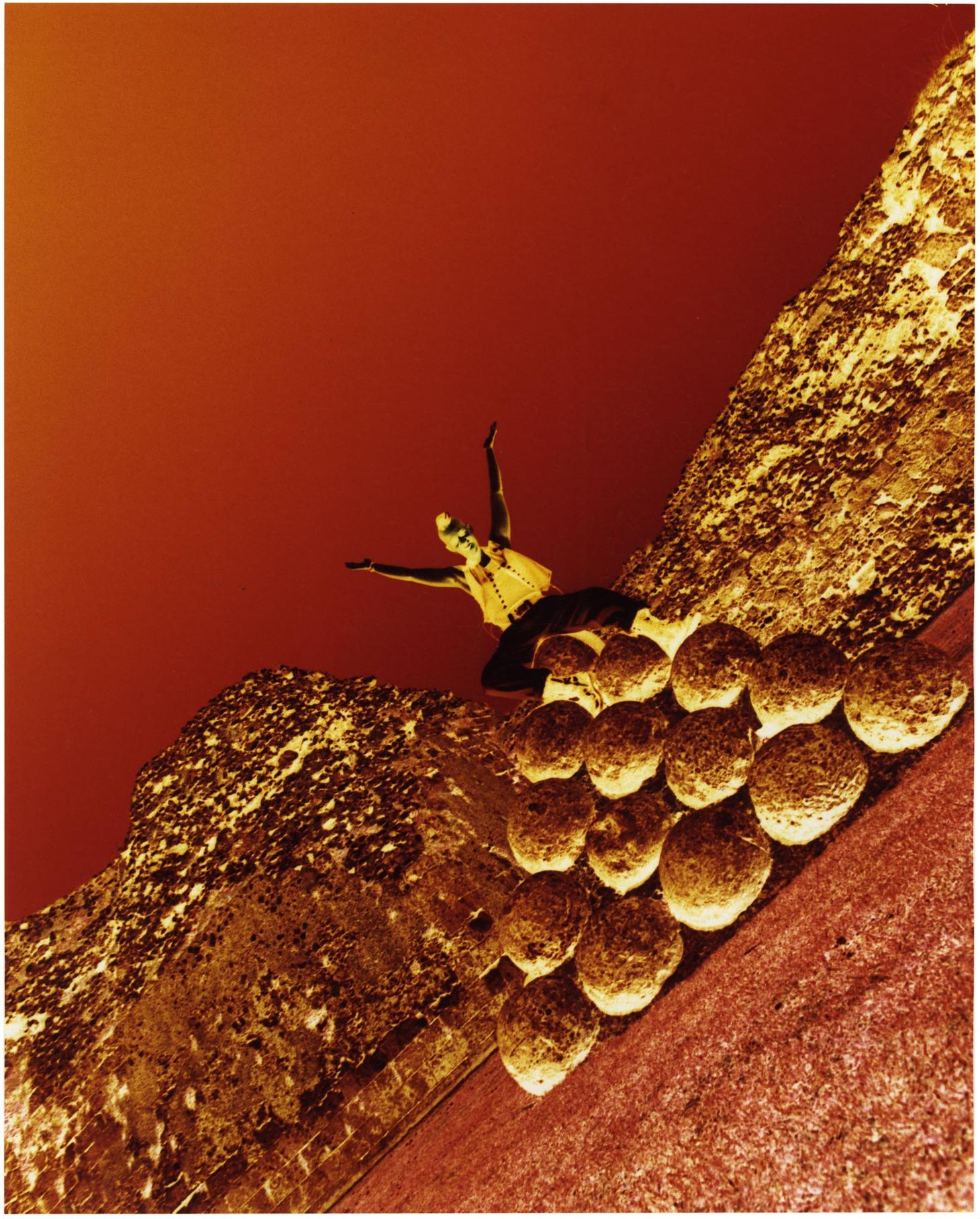
Lola Flash, Lo with Balls (detail), circa 1991. Vintage chromatic print, 20 x 24 in. Bodium Castle, UK.
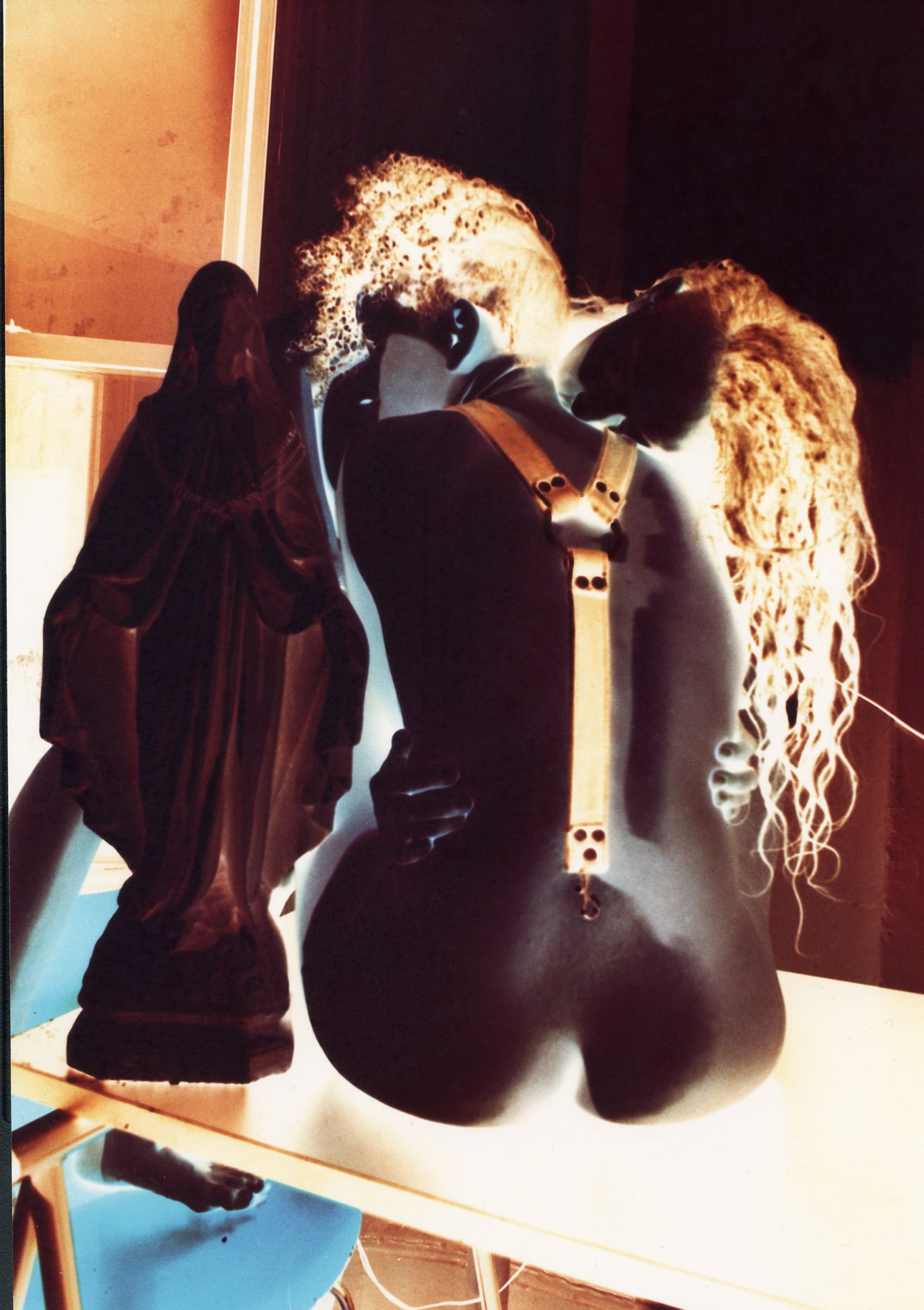
At the height of the AIDS crisis in New York City, ACT UP and ART+ activist Lola Flash was beginning to craft a reality in which colour, pain, and pleasure all claimed new definitions. Through their signature “cross colour” process—an accidental, college-years discovery whereby she ran out of the suitable substrate and instead printed slide film out onto negative paper—“all hues were reversed.” Suddenly, a world which carried the pain of all prejudice lost the mechanisms by which prejudice became power. “I was consumed by the psychological meanings attributed to colours,” they say, and “set upon a path where I created a world that I could happily live in.”
Worlds—not so much completely alternative but subcutaneous, hidden by the skins and overlayers of modern hierarchies—are still a throughline of Flash’s work. In her series QUARTET, she creates windows that look upon the geometry of edges in major cities all over the world. In her self-portrait series syzygy, the vision, a Black space traveler in a prison uniform visits an ice cream window, a decaying cabin, a swimming pool, a cotton field; they stand under the wing of a futuristic statue in all white, stride away from a Joshua tree, sit atop a barren dune with a cat, and hike a marsh pocked with algae-blooming wells.
Flash asks, in all of their work, what there is to discover beneath the pain of the present. Then she goes looking for it, embodying the praxis that has fueled her lifelong advocacy. What she often finds is unsurprising to anyone who has belonged to a radical movement and disappointing to those who seek to suppress them: joy. Joy, chosen, as a stay against the immobility of fear. As the defiant chin when identity is portrayed as an invitation unto death. Joy as the burden of righting a loss, or thousands of losses. Joy as a weapon, as an assertion. Across their work, Flash inverts a terrible pain, to ask what else it might hold.
Meredith Davis on Lola Flash’s Cross Colour series
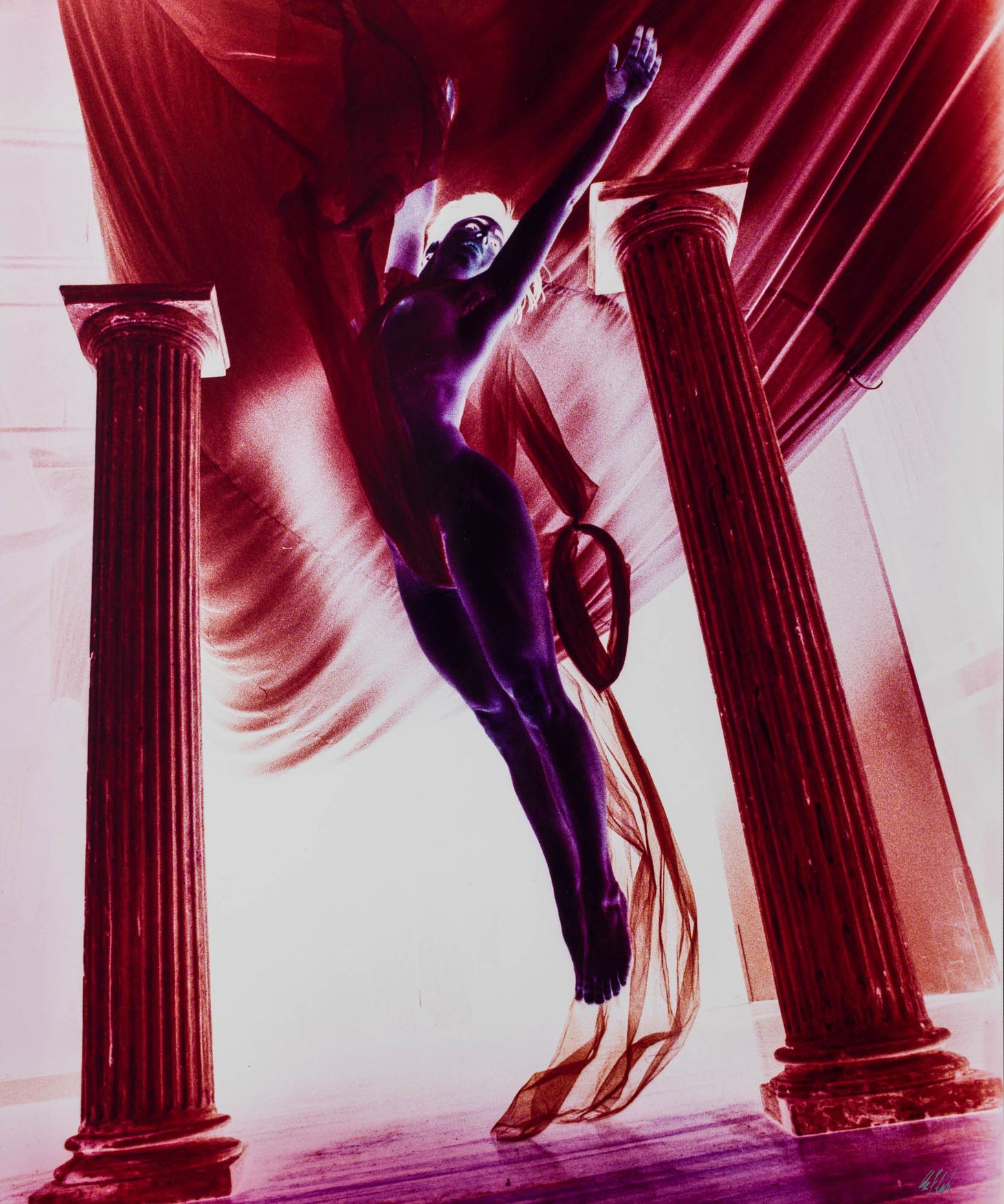
An ecstatic dancer leaps regally between two columns, the inky form of their body in flight before sweeping drapes. A figure, victorious, throws their hands to the sky from a pyramidal throne of boulders. The sky behind them, a pane of burnt orange, mountains golden, grass below in strokes of rose. Another figure, clad in holsters and gunslings, beckons with the lowered rim of their cowboy hat.
Flash’s images take intimate queer life—moments of jubilation, protest, rest—and subvert them into estranged alien artefacts.
Through the “cross colour” process Flash inverts the hues of the image, leaving vivid, negative spaces, at once luminous and removed. With this method, Flash rendered moments of political organisation and tenderness between couples alike from the height of the AIDS crisis in New York City, demanding a new kind of gaze.
What we’re left with in the wake of Flash’s photographic treatment feels like the image on the back of an eyelid, pressed closed after having looked at the sun or neon signage. The impression is that of memory, distorted and glitching, with the shape of the essence preserved. To this extent Flash’s work requires us to be active—we are the collective fluid in which the image develops.
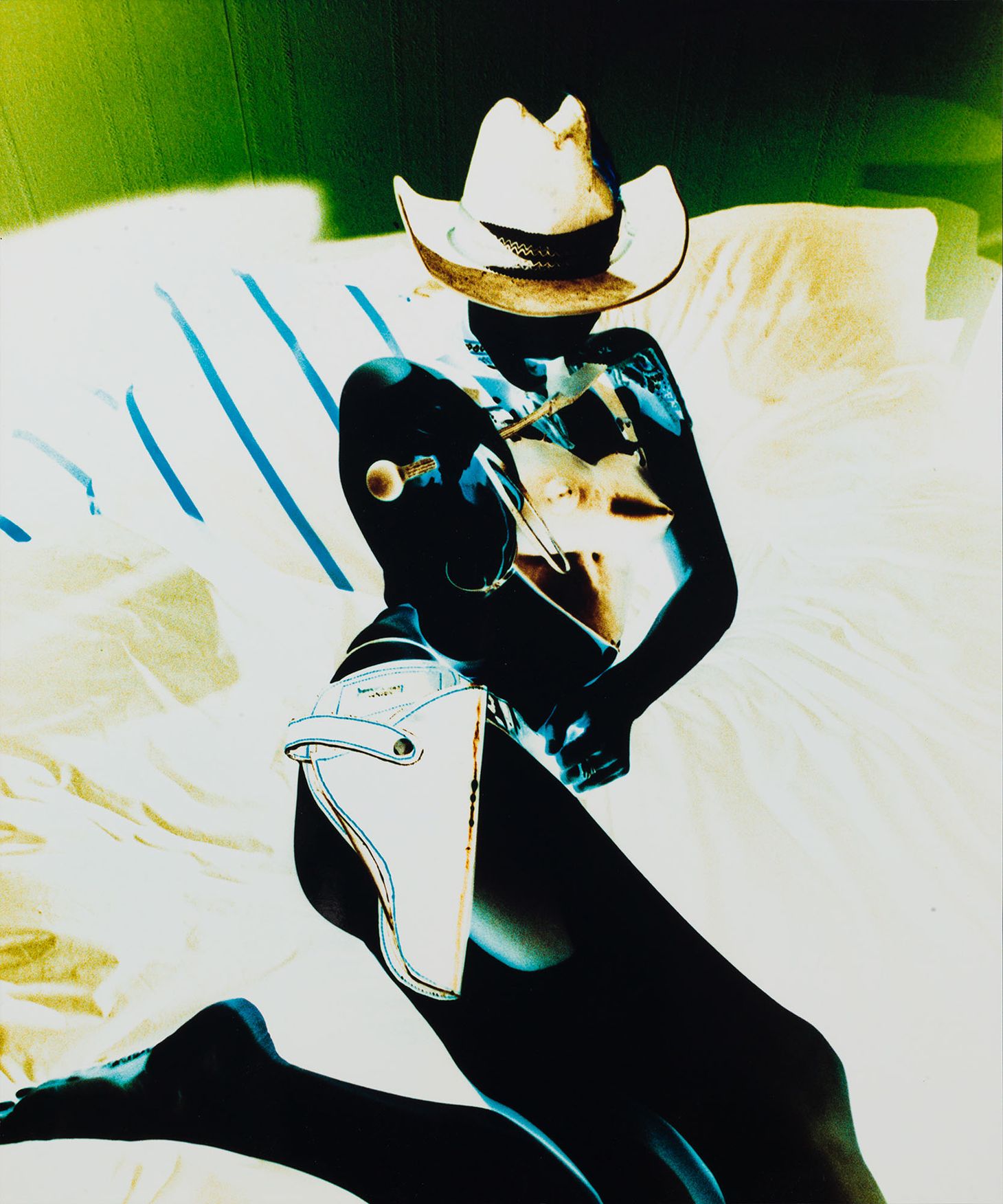
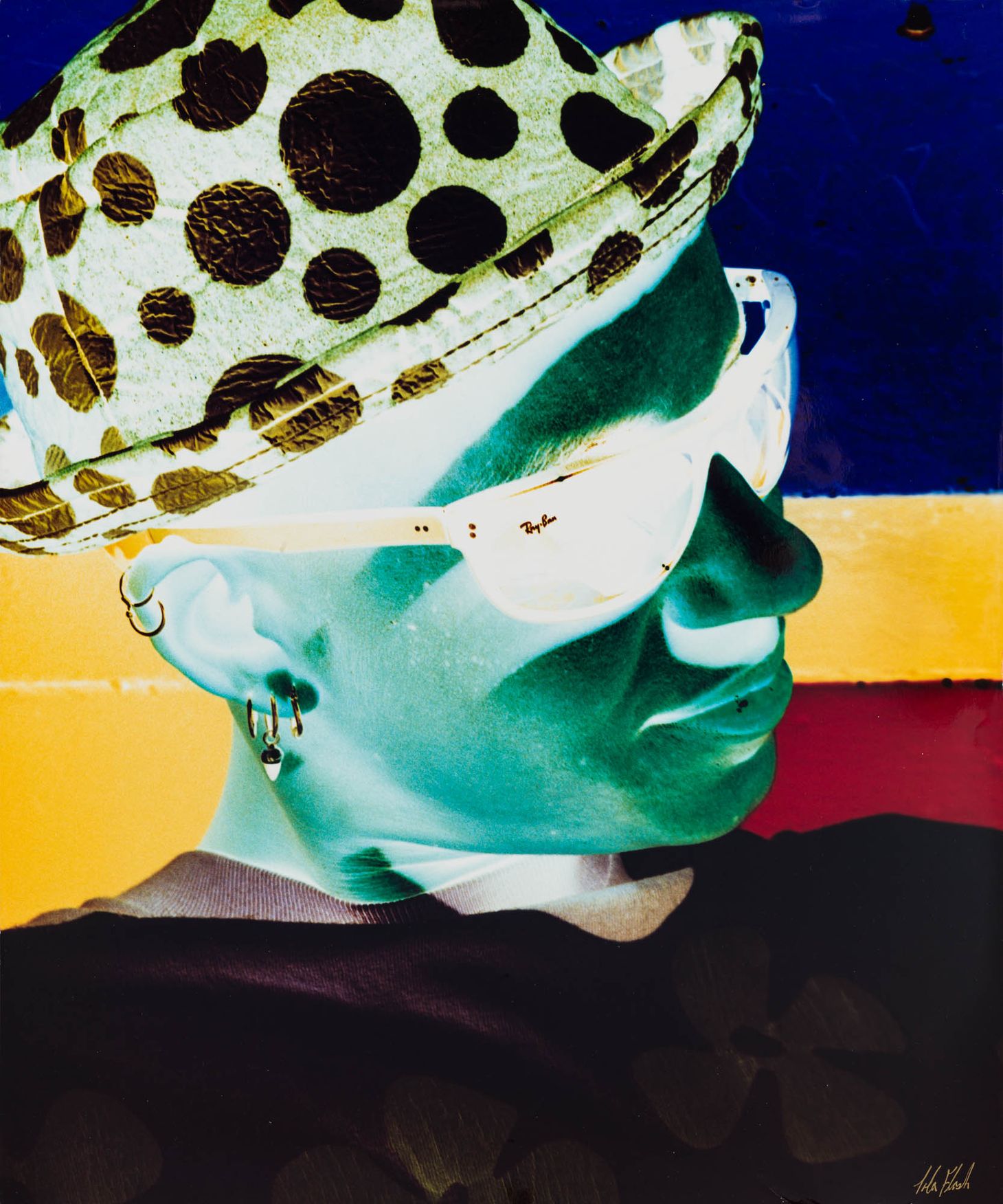
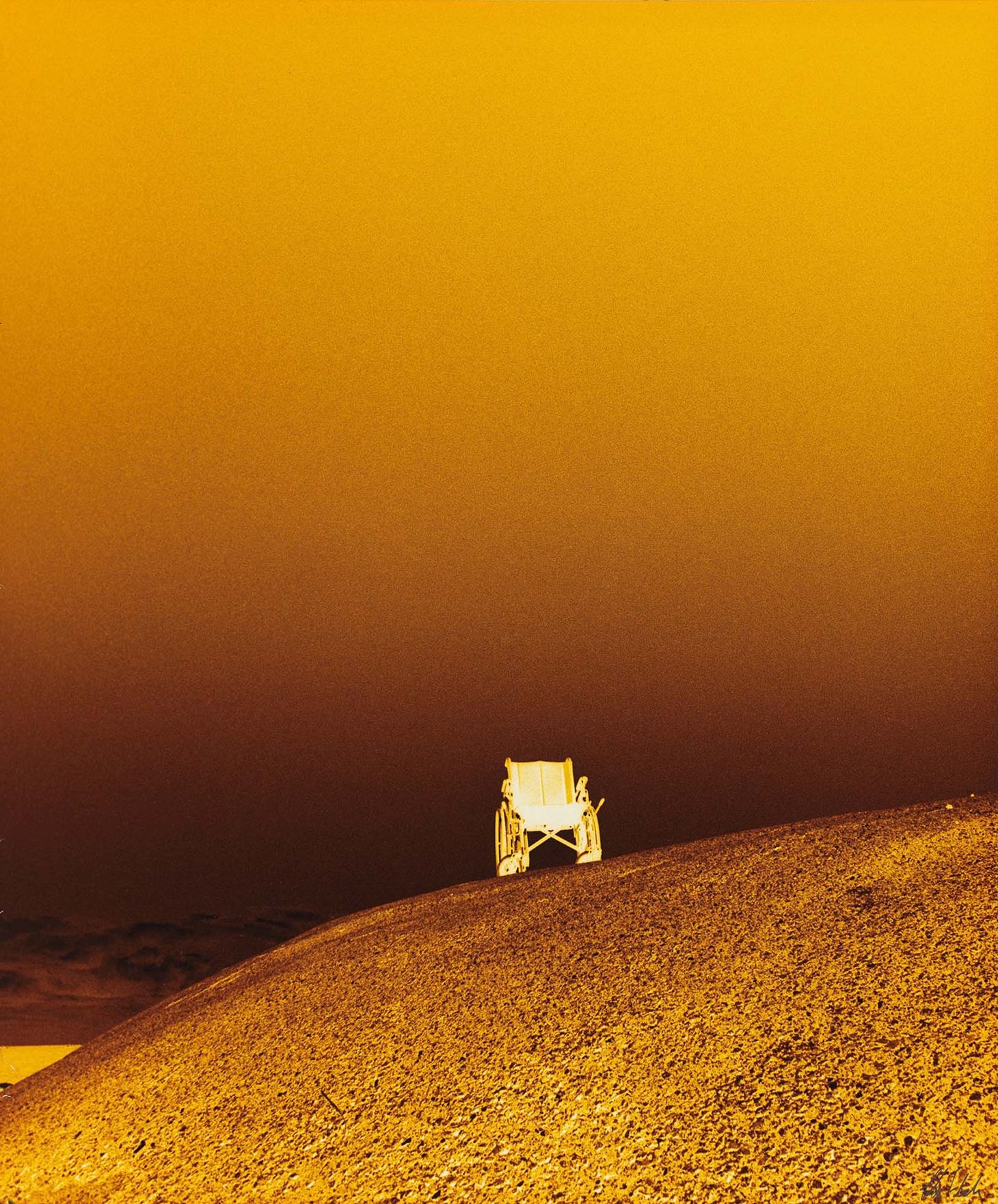
Flash wanted to challenge our ideas of colour, to disrupt how we approached what our never-neutral gaze fell upon. As a Black woman, it was in this world that she was most comfortable: she had created her own realm in which the limiting connotations of colour could be dispelled and expectations around Blackness subverted. Their models now glow in hues of purple, orange, and green; race, though still present at the time of capture, is no longer instantly categorisable. By obfuscating the viewer’s ability to know the race of the models, Flash liberates both the model and viewer from the weight of its significance.
Across the series, through this spectrum of skin shades, Flash’s series gives the impression of the found history of another planet. In creating this world, Flash has also uncovered a space in which to tread through the intimate moments of the AIDS crisis, isolated as affected communities were from mainstream society at the time.
The images disclose a palpable intimacy between Flash and the models, who are portrayed at times in moments of sensual vulnerability. Flash doesn’t capture as a voyeur or witness: she is a present participant with her models and her “new world” is built from within the community, from within the crisis. As such, we as the viewer get invited into that closeness. We are encouraged to make our own examinations from the interior. In 1989, the dominant way of seeing the lives of those affected by AIDS was not to see them at all, or to see them only in decline. The active engagement of viewing Flash’s radical color demands from us more than the callous glance over the pain of others.
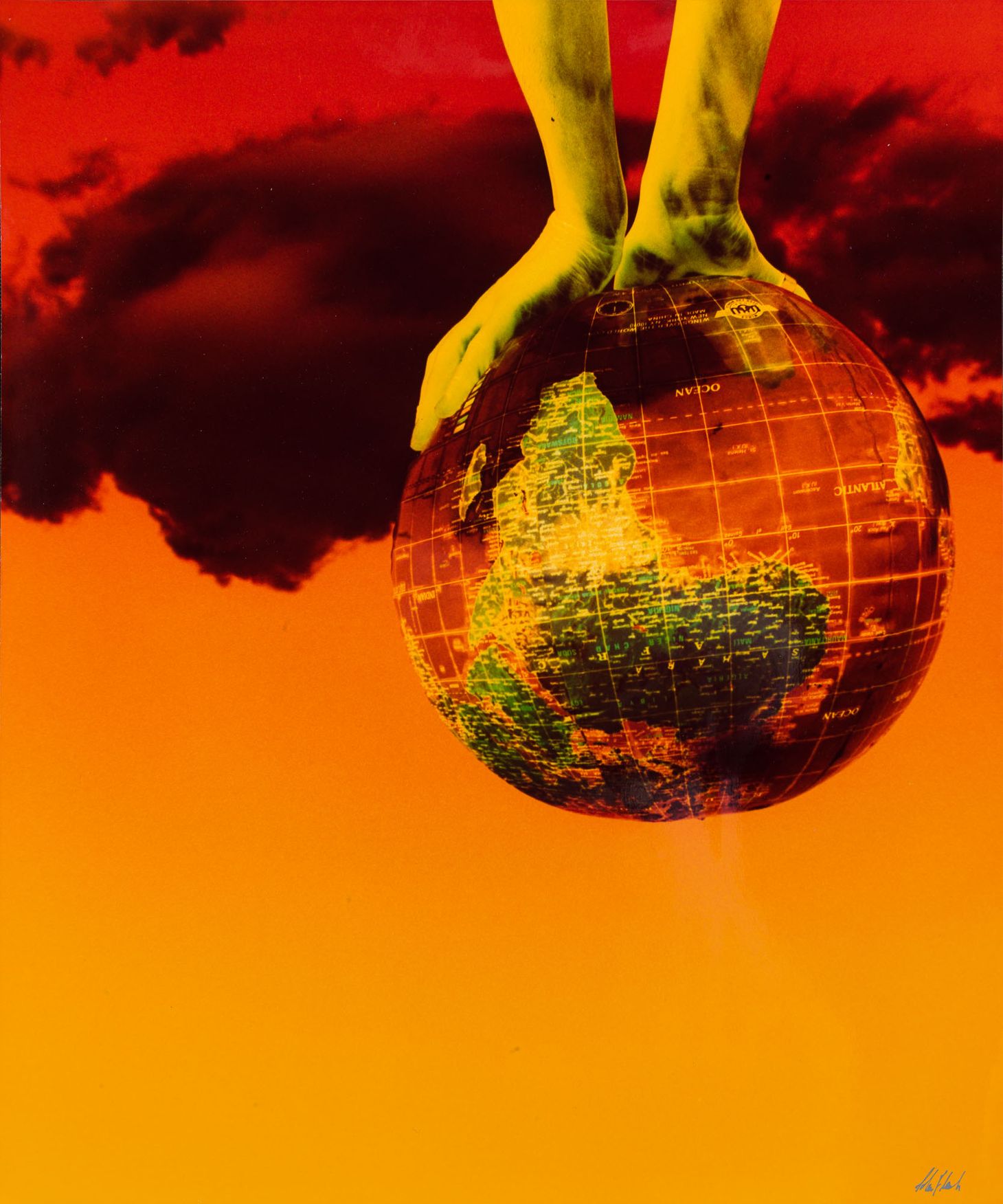
Through twisting our perception of her models, Flash disrupts any neat understanding and engenders our curiosity. Flash had mentioned that as a young student she had wanted to be a scientific photographer. That inquisitive approach remains evident in their work. Here is a photographer who asks us to examine the familiar as if it were unknown to us, with no expectation of what we might learn.
Lola Flash
Lola Flash’s work challenges gender, sexual, and racial preconceptions and other stereotypes. An active member of ACT UP during the time of the AIDS epidemic in New York City, Flash was notably featured in the 1989 “Kissing Doesn’t Kill” poster. Their art and activism are profoundly connected, fueling a life-long commitment to visibility and preserving the legacy of LGBTQIA+ and communities of color worldwide. Flash has work in the collections of the Victoria and Albert Museum in London, MoMA, the Whitney, the National Museum of African American History and Culture, and the Brooklyn Museum. They are a member of the Kamoinge Collective, and on the Board of Queer Art. (updated 10/2026)