
Art by Jin Suk
What Obligation
In summer 2025 I was reading two very different books. One was Yáng Shuāng-zĭ’s novel Taiwan Travelogue, translated by Lin King—the English version has since won the International Booker. And the second was a work of nonfiction, a New York Times best seller—David von Drehle’s The Book of Charlie, which I’d found at a friend’s beach rental when I was after something light.
The two share a foundation in historical details from our “real” world. And both ride on waves of positivity. Von Drehle positions his as something of a self-help book for his adult children, and Yáng’s is structured as a travelogue written by the narrator, a kind of intimate bonne vivante. They’re page-turners in that way—not through suspense, but from a surfeit of joy and possibility. I started off with summer enthusiasm, wanting to embrace them for the different things they were up to, the various moods and feelings they’d support— and the different levels of engagement they’d ask of me.
That sunny tolerance quickly became more difficult. The novel kept acknowledging its moves, but the other—the one whose surfaces seemed to promise a light, easy read—raised subjects and then turned away from them, or made promises it refused to deliver on. It’s true I can’t help reading as an editor, given my day job these many years. But ideally an editor notices what other readers also take in and react to, if often without thinking why. As I sat with these, one book supported my curiosity, and the other snuffed out a great deal that it sparked. Together, they became a yin and yang lesson on what it is, really, that makes a piece of writing honest.
~
When writers sit with a blank page, their obligation is mainly to themselves. But gradually, as they touch on things that resonate beyond, that obligation shifts. This is not obvious, I think. It has to be learned. For me, the lesson landed when I wrote a story after college, during the deadliest years of the AIDS epidemic, and added in a shading of verisimilitude—I hate to admit that I did this, but I did—by giving one of the story’s characters an offstage sibling who’d died of AIDS. My girlfriend at the time read it and was—rightly—appalled. She made clear that I couldn’t drop in one of the most fraught daily horrors people were suffering just to have it fall clean away. Why include such a thing if the narrative doesn’t care?
Fiction and poetry can avoid the randomness of what just happened to happen. They can make a mantra of every-word-to-a-purpose. In fact the same is true of nonfiction. If something isn’t relevant, it can go unmentioned. There’s a natural rejoinder to this: How can a nonfiction writer leave out a major detail just because they don’t want to deal with it? But for the essayist, memoirist, or long-form journalist, the difference is in how the matter of relevance gets parsed. Nonfiction writers have an obligation to facts: if it’s truly relevant that a brother died of AIDS, then that detail comes in, and necessarily shapes other details. Its presence will have gravitational force, unless the writer ignores it.
~
Aoyama, in Taiwan Travelogue, is a successful young Japanese novelist who gets herself invited to Taiwan by promising to lecture and read across the island—then uses the trip to devour her way through its many regions and cuisines, eating impossible amounts of food at each meal. The story is set in the late 1930s, when Japan controlled the entirety of Taiwan, and Aoyama is a committed liberal who believes, or believes she believes, in honoring the host culture as equal to her own. She wants to spend time in the colony and get to know it—know it all—and to show her respect by consuming every morsel.
Over and over, the narrative disarms us in order to take us further in. We too are cosmopolitan, it presumes. So it’s not just that Aoyama is a powerful spirit, ungainsayable, compelling. She’s also a woman who has broken free of the restrictive expectations of her home culture and is living as a respected intellectual, a leader, a guide. As she begins to feel love for the young woman assigned to her as an interpreter, she believes she’s willing to throw over the heterosexual norms of the people around them and retreat into this pairing of, as she dreams it, two equal women living and loving together.
~
The Charlie White of von Drehle’s book is a real person, “a true surfer on a sea of change,” whose life began “in the last years of the agrarian past, that moment when middle-class people lived without electricity or running water, when humans didn’t fly and antibiotics didn’t exist.” A white American man, he was born at about the time Aoyama would have been, but we encounter him in The Book of Charlie after more than a century, when he’s an avuncular, retired neighbor in a Kansas City suburb.
As a vehicle for describing the great technological and social changes that took place during his lifetime, Charlie White could be a tempting subject. By his death at 109, as von Drehle notes, he’d been witness to more than half of U.S. history, and his successes—and interestingly, his perch in Kansas City—put him at the center of a surprising number of twentieth-century trends and histories. “A new game called ‘basketball,’” von Drehle writes, “was popular in Kansas City; in fact, the inventor of basketball, James Naismith, was coaching a fledgling team at nearby University of Kansas.” The outline of Charlie’s life—allowing for the simultaneities emphasized along the way—is essentially the outline of the book: he grew up in a small, farm-inflected city that became an industrial powerhouse; his father died young in an accident in one of the city’s early elevators; Charlie was promoted into the officer corps in World War II; he trained as a physician and then became a surgeon as the field first professionalized.
~
The Book of Charlie means to channel Charlie White’s spirit. And maybe it does, maybe it doesn’t. But at each step along the way, there’s a staggering blindness built in, which models itself on Charlie’s gift for positive thinking. The narrative—often subtly, and well beyond reference to Charlie’s own opinions—establishes an unreflective space, all the more disturbing for replicating an attitude that the writer means to commend to his children. Here’s a sharp example from early in the book. Around the turn of the twentieth century, Charlie’s father was a minister—part of the great culture-spreading engine called the Chautauqua movement, whose tents gave a ready platform for, among so many others, the orator and presidential candidate William Jennings Bryan: von Drehle introduces him by his useful, democratizing nickname “The Great Commoner.” The narrative then goes on about the Chautauqua stage:
The Fisk Jubilee Singers introduced hundreds of white audiences to African- American spirituals, while reformer Maud Ballington Booth moved listeners to tears with her descriptions of life in American prisons. One year, the Clarinda Chautauqua featured an address by the famous educator Booker T. Washington, founder of the Tuskegee Institute and author of Up from Slavery. Hundreds of Iowans crowded around a small platform to listen raptly as Washington spoke between towering shade trees.
The passage treats these gatherings quickly and nostalgically, as idylls in which racism has been overcome. It shows Black Americans singing and speaking; mentions “white audiences” drinking in this opportunity to absorb Black culture and thought; and describes a speech given in Clarinda, Iowa (where Rev. White sat on the Chautauqua committee), by Booker T. Washington, who, seemingly met with unalloyed adoration, spoke “between towering shade trees.” The movement’s connection in those decades to blackface minstrelsy—to name just one detail that would cut a different way—goes unmentioned.
~
In both books, the narratives open onto wider historical worlds. Aoyama takes one breath as an ally of colonized Taiwan:
The Empire’s Southern Expansion Movement and so-called National Spirit Mobilization Movement had taken shape as imperial assimilation movements here in the colonies. Were they not, in essence, brute acts of erasing the distinctions of individual cultures? I couldn’t help but feel resistance and disgust whenever I considered the matter seriously.
And another breath as a benevolent despot, an arbiter of what’s properly, permissibly Taiwanese:
[Her interpreter, Chi-chan,] hesitated. “I see. Aoyama-san prefers dagashi over jo-gashi because in order to be truly immersed in the local environs, one ought to favor street food over restaurant banquets, is that right?” “That’s exactly right. You understand me perfectly!”
Aoyama’s superlatives rise all the way to tone-deafness.
Similar frictions appear in The Book of Charlie. In need of a job, Charlie White crosses picket lines more than once. The narrative calls him a “railroad scab”—using that pejorative but then admiring his pluck, and never touching on the role of strikes or strikebreakers in those decades:
Tensions remained high on picket lines, but Charlie hatched a plan to safely cross. He had a pair of natty white flannel trousers, such as a well-dressed office boy might wear to work. Garbed in flannels, he smuggled his laborer’s overalls inside a book bag and passed unmolested through the line of strikers.
Alertness to such freighted moments and configurations is part of the synthetic work, and pleasure, of reading. And what comes of those lines of tension says everything about the book in hand. Strikes are never mentioned again in The Book of Charlie: their role is a cameo in support of Charlie’s gift for getting by. Was there no guilt, no embarrassment, no need to hide it from anyone back home? Was this just a clever hijinks, in the context of a true need for work, or was he proud to weaken the strike’s force? Maybe von Drehle simply doesn’t know, but how can we trust a narrative that passes over something so big without acknowledging its weight?
~
Taiwan Travelogue must contain some of the jolliest food scenes ever written. Yáng, the author, herself Taiwanese, marshals a wealth of food cultures and subcultures from across the nation’s regions and histories—an act of preservation that slyly pushes back against the colonizing, the ethnographic collecting, of her Japanese narrator:
One time I mentioned that I would like to try the jūn-piánn rolls that Kataoka-sensei had mentioned in his book, and Chi-chan arrived earlier than usual to prepare the dish.
Fresh powdered peanuts; fish floss from the market; ink-black seaweed to be shredded right before the dish was served; two varieties of Taiwanese pickled cabbage, sour and salted; bean sprouts, garlic chives, fresh cabbage, wild rice shoots, bamboo shoots, lotus roots, soybeans, and whole peanuts, all of which would be boiled. Some of this had to be julienned, whereas the beans and nuts were individually shelled. There was river shrimp, which had to be gutted, cleaned, boiled, and peeled. Braise-dried tofu, Taiwanese sausage, and pork were to be sauteed at specific temperatures and cut into slices. . . .
I could not help sneaking glances as Chi-chan worked. “I love eggs. Can we add eggs? . . .”
As in The Book of Charlie, the surfaces here are unremittingly positive. Yáng is not quick to resolve this—she lets us wonder what we’re witnessing, whether the excesses will deepen or correct, and where awareness or acknowledgement will enter, if at all.
Having been raised in the unreflective air of empire, Aoyama doesn’t recognize the torrent of condescensions she pours on Chi-chan. Chi-chan is not supposed to be a tour guide or artist-chef, but only her interpreter—yet Aoyama, as if conferring respect, notices mainly Chi-chan’s kitchen artistry and local knowledge, while treating her as a beck-and-call servant.
Every question the novel raised in me it was responsive to, from the easiest to the most unsettling. Signs of such awareness can be drawn very lightly. Yáng’s novel does not issue statements of resolution or certainty. Those would do damage. Instead, it strengthens implications, and lends connections weight, through the writer’s tools of diction, consequence, structure, and repetition . . .
Even the tool of tense can land crushingly. At the height of her professions of love for Chi-chan, Aoyama is also narrating the moment of her belated, imperfect realization that she has treated Chi-chan as an inferior, that her actions have never hinted at anything Chi-chan could accept as real friendship. For this, the travelogue, which has been narrated in simple past until now, shifts to past perfect, the “past before some intervening event”—as an account might do after someone’s death, when describing earlier times. “We had sipped warm rice wine. . . .” That “had” carries Aoyama’s shock, her all-too-partial awakening. Before the reader has even learned of the fracture between them, the loss is obvious: every sentence carries Chi-chan’s absence, each of Aoyama’s attempts arrives with its failure. Here, subtexts that began as hints have become drivers. Aoyama is not a perfect juggernaut after all. She lives in a world, our world, of reaction and upshot. And we feel much more for her as a result.
~
It’s worth saying: writing can be rich with implications the author isn’t aware of. We live in our own limited frame of cultures, places, and times—the future is likely to approach us with different notions of what signifies. But when a piece of writing enters new terrain and seems to whistle and pretend there’s nothing to see, it abdicates any claim to the reader’s trust.
The Book of Charlie—naturally, for a narrative that covers the broad sweep of the last century and a quarter of U.S. history— brings in the aftermath of slavery. But the slave in question is Epictetus. His Stoic teachings enter because of their kinship with Charlie’s guiding philosophy, which goes something like, “Change what you can and don’t sweat the rest”:
For the slave, this insight spoke to the determination of Epictetus to live with purpose and dignity even as a master controlled his body and actions. He could be bought and sold and worked like an animal, but he could not be made to think or act or be like an animal.
Stoicism carries the book, so in that sense, this passage doesn’t fall away unnoticed. But these words send out other signals too, and I anticipated—eagerly at first—how those would signify, how they’d be reflected back. When nothing happened, I began to ask, What’s going on that the narrative raises the issue of slavery—putting responsibility on the slave, no less, to choose to live well in spite of everything—yet largely ignores Black America, even during periods in Charlie’s life when that would seem especially difficult to do? The Book of Charlie doesn’t support that kind of delving. It just proceeds charmingly, keeping the reader’s eye on the karaoke ball as it bounces over the lyrics, steadily forward to the end.
I happened to read this book—two years after its release—in the midst of a U.S. presidency chosen by voters in part for its promise to set aside (refute, refuse) any “disparaging” discussion of how we got where we are, and where we’re headed.
Real grappling does damage to the simplicities of myth.
~
But the obligation I’m tracing is not inevitably political. Writers will always infuse their work with their values, whatever those might be. The obligation—for a piece of writing to stay reactive to the complexity and interconnectedness it summons—is about seriousness and intimacy: the writer’s vulnerability and openness as they work (their willingness to go where a piece takes them), and the space left for readers to enter and be able to breathe (they, like characters, not simply to be manipulated).
More than once in Taiwan Travelogue, the book’s translator intervenes; Lin King gives small but important glosses in footnotes. After the long passage quoted above, early enough that we’re still trying to suss out what the novel makes of Aoyama’s excesses, King steps in to convert for us the units employed, making it clear that Aoyama and Chi-chan—meaning mostly Aoyama—consume 1.6 pounds of just the skins wrapped around that evening’s marathon of jūn-piánn. This is impossible, given what goes into each of those rolls—and it’s funny! But Yáng’s fabulism is no game—it proves to be a kind of counter-narrative, and yet another surprising way in which the author responds to an unsettling character.
When a note is struck, there’s endless room for art in making use of the resonances—none in acting like they don’t exist. Writing lives on webs of vibration. The most essential work calls on us to feel how different elements catch and hold frequencies. And it drives us to need the same in return, from everything we read.
William Pierce
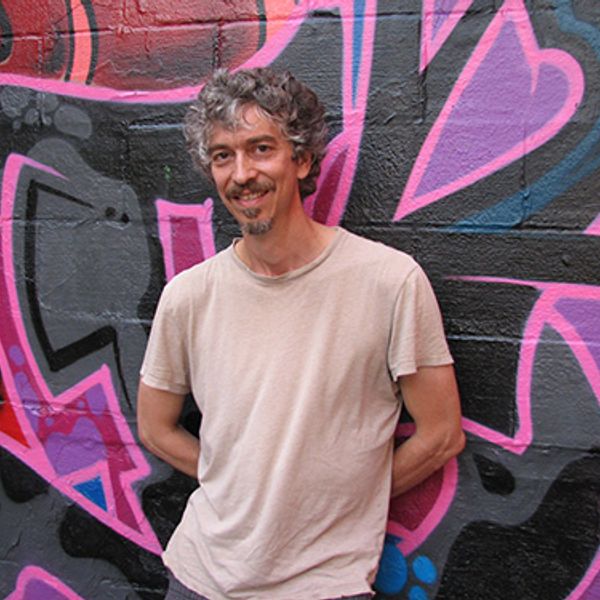
William Pierce is editor of AGNI. His short stories have appeared in Granta, Ecotone, American Literary Review, and elsewhere. Excerpts from his novel Twenty Sixteen can be found in Harvard Review, The Western Humanities Review, and on the Freeman’s channel at Literary Hub. His translations of fiction have appeared or are forthcoming in New England Review and The Georgia Review; other work of his own, in Electric Literature, The Writer’s Chronicle, Solstice, The Continental, Consequence, and as part of MacArthur Fellow Anna Schuleit Haber’s art project “The Alphabet,” commissioned by the Fitchburg Art Museum. Pierce is the author of Reality Hunger: On Karl Ove Knausgaard’s My Struggle (Arrowsmith Press, 2016), a monograph first serialized as a three-part essay at The Los Angeles Review of Books. More at williampiercewriter.com. (updated 9/2026)
His first essay for AGNI, “Fabulously Real,” received special mention in the 2006 Pushcart Prize anthology. His introduction to AGNI 91, “The Peculiarities of Literary Meaning,” was cited in the 2022 Pushcart anthology, and his introductions to AGNI 98 and AGNI 100 were Notables in The Best American Essays. He is interviewed here at NewPages.com. With E. C. Osondu, he coedited The AGNI Portfolio of African Fiction.