
Danielle Mckinney, Mercy (detail), featured in AGNI 103
The Cooperage
I grew up on a small farm in West Townsend, Massachusetts, northeast of the Worcester Hills, at the border of southern New Hampshire. Its house and barns were built in 1800, and thirty years later, as the first stirrings of the Industrial Revolution whispered through, my family erected a cooperage there among the pastures and apple trees, a small clapboard outbuilding that, four generations later, I fell in love with and secretly claimed as my own.
Barrels were ubiquitous in those days, used to store and carry all kinds of supplies and merchandise, both wet and dry: flour, wine, ten-penny nails. My great-great-grandfather and his brothers, who’d immigrated from Barford, England, were known as white coopers because they used only white oaks. When they ran out of white oak trees on their own 160 acres, they apparently thought nothing of trespassing and cutting down oaks that didn’t belong to them.
Coopering was mostly winter work. Once the oaks were down and the bark removed, the resulting beams would be sawn into planks, to be cured outdoors for three years until all the tannin leached out—tannin might change the taste of wine. The planks would be cut into staves—the plural of staff—each formed with a bulge in the middle so that the barrel could be rounded by hoops pounded over the curving boards. The finished barrels were steamed for an hour and, later in the spring, charred inside with a brazier of fire. It was never clear to the family what kind of barrels the brothers made, or for whom. We could only surmise from records whether they made tuns, puncheons, hogsheads, tierce, runlets, kilderkins, firkins, or piggins.
By the time I was born, in the mid-1950s, a century had passed and the farm was shabby. No one had made a barrel there for generations—indeed, no one had made much of anything. With its twenty-inch pine floors, a stone fireplace big enough to hold four men abreast and at full height, a granite front step, a brass door knocker, and windows looking out over the orchard, where white-tailed deer often grazed, the cooperage became our very own all-purpose junk shop. In addition to the steel hoops, draw shaves, and awls of the coopering business, there was an enormous wooden sleigh with all the bits of tackle, harness, and gubbins left over from midwinter travel before automobiles, its leather seats and dashboard chewed over the years by field mice; the mast of a cat boat named The Louise, with its running rigging and pulleys in a heap beside it; wooden skis, old skates, and tables and chairs that no one could bring themselves to discard; kerosene and early electric lamps; iron box springs with rusty coils; maple, elm, and mahogany bed frames and their horsehair mattresses; apple boxes of tools; hammocks, hassocks, dining tables, and an assortment of pots and pans. The cooper’s shop was as crammed as an attic. Yet even so, standing on the stone wall and peering in through the wavy glass of the cooperage window—the one I could reach—I could see my entire future.
At age six, I read my first real book—a foxed copy of Daddy Long Legs from 1912, written by Jean Webster—and knew, from then on, that I’d be a writer. The novel was about an orphan named Jerusha Abbott and a mysterious benefactor who sends her to college. I was in love with orphans in those days because I felt like one. I was also in love with the idea of mysterious benefactors because I was deeply curious about adults who didn’t always fail children. Just as I understood family to mean an often-odd assortment of children and grown-ups who live in the same house,I understood parent to be a synonym for adult—a word implying little interest in the lives of kids.
I felt something profound after finishing Daddy Long Legs: that I’d been reading words set down by someone long dead and that if I wrote a book which was published and shelved in a town library a hundred years hence, a little girl like me might reach for it and, through her sounding out my words, using her own breath, I, through my work, would somehow be alive again.
I started my first “novel” the winter I turned seven. It was about a hardscrabble farm in Freedom, New Hampshire, and the family who lived there with all their animals. The more of the marbled school notebook I filled, the more I found myself writing about the smart, overworked oldest daughter, a girl saddled with unending chores and responsible for the littler children. I’d read enough by then to know my novel had to be typed. So I begged my mother for a typewriter and at Christmas was given a very large, impossibly heavy Royal with an enormous red bow on it. I was eight when I finally typed “THE END” in all caps on the last page, and that morning, sitting on a hard wooden pew for Sunday services, I felt at once stunned and utterly superior in the midst of all the sonorous Latin and suffocating incense. No one in our tiny country church, no one in our whole town, had any idea what I’d done. I’d written a novel and would never have to die!
A writer needed a room where she could put her books, her desk, and her typewriter, and keep the world away. In my mind, the cooperage was the ideal place for me: it would be large and spacious enough for my library, which would grow bigger with every Christmas and birthday that passed, with space also for a desk, a cot, and a cook stove. I could sit out in the summer doorway, my feet warming on the large granite step, and drink tea while the early morning fog still shawled the woods. Down front in October, I could pick Baldwin apples from the three trees my great-great-grandmother had planted, which now, after 150 years, were as bent and scaly as wizards. In spring, I could fill my arms with forsythia first and later lilac, arranging them in my family’s tall, cut-glass vase with its sterling-silver rim. At night I could watch the moon go through her phases, rising and disappearing through all the dark nights of the seasons. I could listen to the mourning doves, whippoorwills, and phoebes that now I heard from my bedroom window, and on those mornings in the future, as I sat at my desk writing my stories and novels, I’d be looking out over the stone wall as day brightened, watching the white-tailed deer stepping delicately through timothy. This daydream sustained me through my childhood: I would live forever on our farm, and in the perfect studio of the cooperage I would write my books.
I couldn’t imagine then that I’d never write a word in the cooper’s shop, that my love for it would not be able to save it. I didn’t foresee as a teenager that there would be a terrible rupture in our family, or that I’d be sent away because I was no longer welcome to live in the farmhouse. At the turn of the twenty-first century, the land was cut up and sold for residential lots. Strangers are living in the farmhouse where I grew up, which doesn’t make me sad for a moment. But this winter, the cooperage, having leaned away from the stone wall for decades, was summarily pulled down. The person who informed me didn’t know what that little building had meant to me all these years, or that I would hear in her anecdote the screaming of handmade nails as the clapboards pulled away from one another and the cooper’s shop collapsed.
I did grow up to be a writer—at least that part came true. I sometimes dream of the cooperage and once in a while find myself rapping on its brass knocker and walking inside to find my English relatives in front of a great roaring fire. In those dreams, I’m somehow able to tell them, “Grandfathers, I am a poet now—I faithfully learned your trade and more.” Because, of course, I’m still the coopers’ great-great-granddaughter: I bend the hard white oak of language in my mind’s fire, hammering steel hoops of metaphor over the drawn-shaven wood, pulling it toward my heart’s hottest blaze, hewing each form to measure what it will hold, so that each poem cleanly bears its weight of meaning, as though the lines were wheat, wine, or ten-penny nails.
On the roof of the cooperage was a copper weathervane with four spinning arrows of wind. I believe it was made at the local forge in West Townsend, at the center a sculpted copper horse, a perfect image of one of my great-great-grandfather’s own, drawn from either the roan called Cherry Busco or the bay called Shadigay.
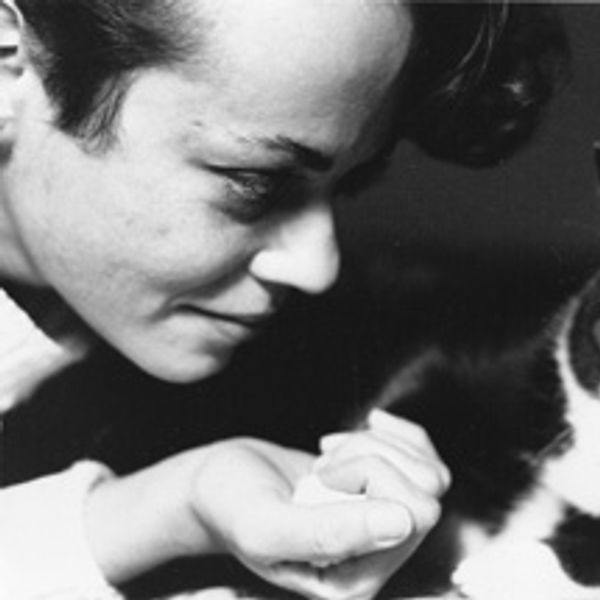
Melissa Green
Melissa Green is the author of three collections of poems—The Squanicook Eclogues (W. W. Norton & Co.), Fifty-Two (Arrowsmith Press), and most recently Magpiety: New and Selected Poems (Arrowsmith)—and two memoirs, Color Is the Suffering of Light (Norton) and The Linen Way (Rosa Mira Books). She has received the Norma Farber Award from the Poetry Society of America and the Lavan Award from the Academy of American Poets. Her work has appeared in, among other places, AGNI, Little Star, The Paris Review, and The Best American Poetry, and is the subject of a volume edited by Sumita Chakraborty, Soundings: On the Poetry of Melissa Green (Arrowsmith Press). Green lives in Brookline, Massachusetts. (updated 4/2026)
Read Sumita Chakraborty’s interview with Melissa Green at The Los Angeles Review of Books.